Is PRP Hair Treatment Effective for Hair Loss? Benefits, Results and What to Expect
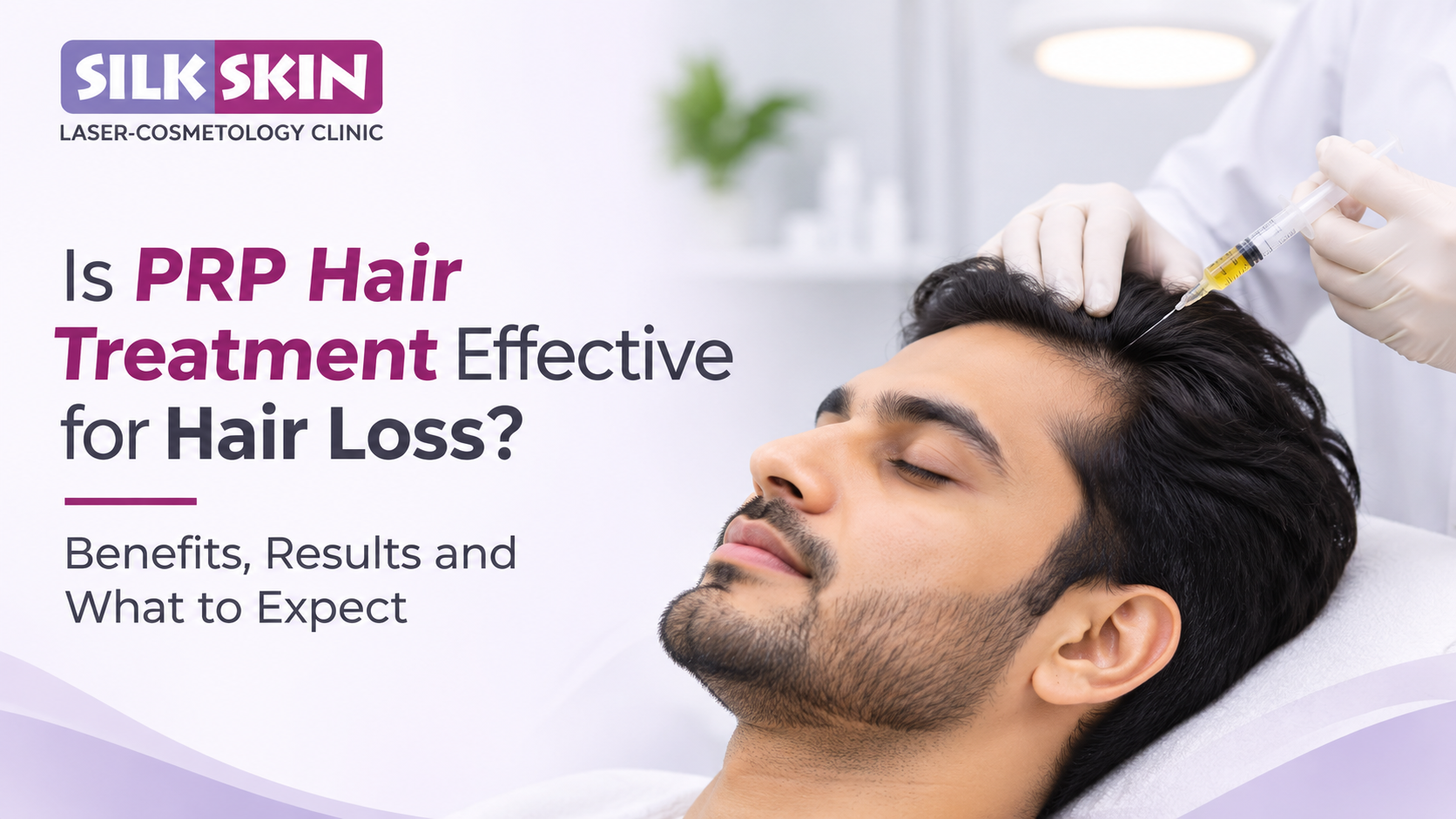
Hair loss and thinning hair are common concerns among both men and women. Whether it is a receding hairline, a widening parting, or reduced hair density, losing hair can affect confidence and overall appearance. With advancements in dermatology and hair restoration, several non-surgical treatments are now available to address certain types of hair loss.
One treatment that has gained considerable attention is Platelet-Rich Plasma (PRP) hair treatment.
But an important question remains: Is PRP hair treatment really effective for hair loss?
PRP therapy is a minimally invasive treatment that uses a concentrated portion of the patient's own blood, containing platelets and growth factors, to support hair follicle activity. Clinical research suggests that PRP may improve hair density and reduce hair thinning in some individuals, particularly those with androgenetic alopecia (pattern hair loss).
However, its effectiveness depends on several factors, including the underlying cause of hair loss, the condition of existing hair follicles, the treatment protocol, and individual response.
Let's understand how PRP hair treatment works, its benefits, expected results, and who may benefit from this procedure.
1. What Is PRP Hair Treatment?
PRP (Platelet-Rich Plasma) hair treatment is a non-surgical hair restoration procedure that uses platelet-rich plasma obtained from the patient's own blood.
Platelets are blood components involved in the body's natural healing and repair processes. They contain various growth factors and signalling proteins that participate in tissue repair and cellular activity.
During PRP treatment, a small blood sample is collected and processed using a centrifuge to separate the platelet-rich plasma from other blood components.
The concentrated plasma is then injected into selected areas of the scalp.
The aim is to deliver platelet-derived growth factors to the scalp environment, potentially supporting hair follicle activity and improving hair density in suitable patients.
PRP is commonly explored as a treatment for:
Androgenetic alopecia (male and female pattern hair loss).
Early-stage hair thinning.
Reduced hair density.
Certain cases of non-scarring hair loss, following specialist evaluation.
Hair restoration as an adjunct to other medical treatments.
2. How Does PRP Hair Treatment Work?
To understand the effectiveness of PRP therapy, it is important to understand the role of hair follicles and growth factors.
Each hair follicle follows a natural growth cycle consisting of three main phases:
Anagen Phase: The active growth phase during which hair follicles produce new hair.
Catagen Phase: A short transitional phase in which hair growth slows and the follicle undergoes structural changes.
Telogen Phase: The resting phase, after which the hair naturally sheds and a new growth cycle begins.
In certain types of hair loss, particularly androgenetic alopecia, hair follicles gradually undergo miniaturization. This means that follicles produce progressively thinner and shorter hair strands.
PRP contains platelet-derived growth factors and other bioactive molecules that may influence cellular signalling, tissue repair and the follicular environment.
Potential mechanisms include:
Supporting activity in cells associated with hair follicles.
Influencing the hair growth cycle.
Supporting dermal papilla cell activity.
Modulating local tissue responses.
Potentially improving hair density and thickness.
However, the exact biological mechanisms through which PRP improves hair growth are still being investigated.
3. Is PRP Hair Treatment Effective for Hair Loss?
Yes, PRP hair treatment can be effective for certain types of hair loss, particularly androgenetic alopecia.
Clinical studies and systematic reviews have reported improvements in hair density in some patients receiving PRP treatment.
However, results are not identical for everyone.
PRP may be particularly useful for individuals who:
Have early-stage male or female pattern hair loss.
Experience gradual hair thinning.
Still have active but miniaturized hair follicles.
Want to explore non-surgical hair restoration options.
Are looking for an additional treatment alongside an appropriate hair-loss management plan.
PRP is generally less likely to produce meaningful results in areas where hair follicles have been permanently destroyed or are no longer present.
It is also important to understand that PRP does not permanently cure genetic hair loss. Continued management may be necessary to maintain improvements.
4. What Are the Benefits of PRP Hair Treatment?
PRP therapy offers several potential benefits when performed on appropriately selected patients.
A. Uses Your Own Blood
PRP is prepared from the patient's own blood, making it an autologous treatment.
This reduces the risk of immune reactions associated with introducing donor-derived blood components.
B. Minimally Invasive Procedure
PRP hair treatment involves injections into the scalp rather than conventional surgery. It generally requires minimal downtime.
C. May Improve Hair Density
Clinical evidence suggests that PRP can increase hair density in some individuals with pattern hair loss.
D. May Help Reduce Hair Thinning
Some patients experience reduced hair shedding and improvements in hair thickness following treatment.
E. Can Be Combined With Other Treatments
Depending on the diagnosis, PRP may be incorporated into a broader hair restoration plan that includes medically appropriate treatments.
F. No General Anaesthesia Required
PRP is usually performed as an outpatient procedure without general anaesthesia. Topical or local anaesthesia may be used to improve comfort.
5. What Happens During a PRP Hair Treatment Procedure?
PRP hair treatment is generally performed in a clinical setting by a qualified medical professional.
The procedure typically involves the following steps:
Step 1: Scalp and Hair Assessment
The dermatologist evaluates the scalp, hair density, pattern of hair loss and medical history.
The underlying cause of hair loss is assessed to determine whether PRP is an appropriate option.
Step 2: Blood Collection
A small quantity of blood is collected from the patient's arm using a sterile blood collection system.
Step 3: Centrifugation
The blood sample is placed in a centrifuge, which separates its components based on density.
The platelet-rich plasma is then prepared for treatment.
Step 4: Scalp Preparation
The treatment area is cleaned and prepared. Local or topical anaesthesia may be considered depending on the patient's comfort and the clinical protocol.
Step 5: PRP Application
The prepared platelet-rich plasma is injected into selected areas of the scalp, particularly areas affected by thinning.
Step 6: Post-Treatment Care
The patient receives instructions regarding scalp care, washing, medications and follow-up appointments.
The procedure is generally completed within a relatively short clinic visit, although the exact duration varies.
6. How Many PRP Hair Treatment Sessions Are Needed?
The number of PRP sessions depends on the patient's hair-loss pattern, severity, response to treatment and the dermatologist's recommended protocol.
A commonly used approach involves:
Initial phase: Approximately 3–4 sessions, often spaced around 4 weeks apart.
Assessment phase: Hair density and treatment response are evaluated over the following months.
Maintenance phase: Additional sessions may be recommended at individualized intervals if improvements are observed.
There is no single standardized PRP schedule that works for every patient.
The dermatologist determines the treatment frequency according to clinical findings and individual requirements.
7. How Long Does PRP Take to Show Hair Growth Results?
PRP hair treatment does not produce immediate hair growth. Hair follicles follow a natural biological cycle, so visible changes take time.
Patients may experience different results depending on their condition and response to treatment.
A general timeline may look like this:
First Few Weeks
The scalp gradually recovers from the injection procedure.
Significant visible hair growth should not be expected immediately.
Around 2–3 Months
Early changes may become noticeable in some patients.
Hair shedding and hair texture can be assessed.
Around 3–6 Months
Changes in hair density and thickness may become more apparent.
Treatment response can be evaluated more meaningfully.
Around 6–12 Months
Longer-term results can be assessed.
Maintenance or additional treatment may be discussed depending on the response.
These timelines are approximate and are not guaranteed outcomes.
8. Are There Any Side Effects of PRP Hair Treatment?
PRP hair treatment is generally well tolerated when performed using appropriate sterile techniques by trained medical professionals.
Since the treatment uses the patient's own blood, the risk of allergic reactions to the plasma itself is relatively low.
However, like any injection-based procedure, PRP can cause side effects.
Possible side effects include:
Mild pain or discomfort during injections.
Temporary redness around injection sites.
Scalp tenderness.
Minor swelling.
Small bruises.
Temporary headaches
Rarely, infection or other injection-related complications.
Patients should inform their dermatologist about existing medical conditions, bleeding or platelet disorders, and all medications they take before undergoing treatment.
9. Who Is an Ideal Candidate for PRP Hair Treatment?
PRP may be considered for individuals experiencing certain types of hair thinning or hair loss.
Potential candidates include:
Men with early-stage androgenetic alopecia.
Women experiencing female pattern hair loss.
Individuals with reduced hair density.
Patients with miniaturized but viable hair follicles.
People seeking a non-surgical option as part of a comprehensive hair restoration plan.
However, PRP is not suitable for every type of hair loss.
Individuals with extensive bald areas, certain active scalp conditions, significant platelet abnormalities or specific medical conditions may require alternative treatment approaches.
A proper dermatological assessment is essential before starting PRP therapy.
10. PRP Hair Treatment vs Exosome Hair Treatment: What Is the Difference?
Both PRP and exosome-based therapies are discussed in the field of regenerative hair treatments, but they are different approaches.
| Feature | PRP Hair Treatment | Exosome-Based Hair Treatment |
|---|---|---|
| Source | Patient's own blood | Exosome preparations from a biological source |
| Main components | Concentrated platelets and platelet-derived growth factors | Extracellular vesicles containing biological signalling molecules |
| Procedure | Blood collection, centrifugation and scalp injections | Product preparation and administration according to the protocol |
| Clinical evidence | Human clinical studies support potential benefits for selected hair-loss conditions | Clinical evidence remains limited and emerging |
| Standardization | Protocols vary between clinics | Products and preparation methods vary considerably |
PRP has a more established clinical evidence base for certain forms of hair loss.
Exosome-based hair treatments are still being investigated, and their safety, effectiveness, product quality and regulatory status require careful consideration.
Neither treatment should be considered a guaranteed solution for hair loss.
The appropriate option depends on the patient's diagnosis and a dermatologist's clinical recommendation.
11. Can PRP Be Combined With Other Hair Loss Treatments?
Yes. In selected patients, PRP may be used alongside other evidence-based hair-loss treatments.
Depending on the underlying cause of hair loss, a dermatologist may consider:
Minoxidil: A medication used for certain types of hair loss that can support hair growth.
Finasteride: A prescription medication that may be recommended for selected men with androgenetic alopecia.
Low-Level Laser Therapy (LLLT): A light-based treatment used in certain hair restoration protocols.
Nutritional correction: Addressing confirmed nutritional deficiencies that may contribute to hair shedding.
Other medical treatments: Selected according to the diagnosis and individual medical history.
Combining treatments does not automatically guarantee better results. A dermatologist should evaluate the suitability, potential interactions and expected benefits of each option.
12. When Should You Consult a Dermatologist for Hair Loss?
Hair thinning can develop gradually or appear suddenly, and its causes can vary considerably.
You should consult a dermatologist if you notice:
Increasing hair shedding.
A widening hair parting.
A receding hairline.
Visible scalp through thinning hair.
Reduced hair density.
Patchy areas of hair loss.
Persistent scalp itching, redness or scaling.
Sudden or unexplained hair loss.
Early diagnosis can help identify the underlying cause and improve the chances of selecting an appropriate treatment.
A dermatologist may recommend scalp examination, trichoscopy, blood investigations or other assessments depending on the symptoms.
Frequently Asked Questions About PRP Hair Treatment
1. Does PRP really help regrow hair?
PRP can improve hair density in some patients, particularly those with androgenetic alopecia. However, results vary, and it does not guarantee complete hair regrowth.
2. Is PRP hair treatment permanent?
No. PRP is not a permanent cure for genetic hair loss. Maintenance treatment and ongoing medical management may be required.
3. Is PRP better than a hair transplant?
PRP and hair transplantation serve different purposes. PRP may help improve hair density in suitable patients with existing follicles, whereas hair transplantation surgically relocates hair follicles to areas of hair loss. The appropriate option depends on the extent and cause of hair loss.
4. Can women undergo PRP hair treatment?
Yes. PRP may be considered for women experiencing certain types of hair thinning, particularly female pattern hair loss, following a proper dermatological assessment.
5. Is PRP hair treatment painful?
Some patients experience mild discomfort during scalp injections. Topical or local anaesthesia may be used to improve comfort.
6. Can PRP stop hair fall completely?
No. PRP may reduce hair shedding in some patients, but it cannot guarantee that hair loss will stop completely. The underlying cause must also be addressed.
7. Does PRP work on completely bald areas?
PRP is generally more suitable for areas with existing, functioning but weakened or miniaturized hair follicles. It is unlikely to restore hair in areas where follicles have been permanently lost.
Conclusion
PRP hair treatment has become an important non-surgical option in modern hair restoration. By using platelet-rich plasma obtained from the patient's own blood, this procedure aims to support the scalp environment and improve hair density in suitable individuals.
Clinical evidence suggests that PRP can be beneficial for certain types of hair loss, particularly early-stage androgenetic alopecia. However, its effectiveness depends on the underlying condition, treatment protocol and individual response.
The most important step is identifying the actual cause of hair loss before selecting a treatment.
If you are experiencing hair thinning, excessive shedding or reduced hair density, consult a qualified dermatologist to understand whether PRP, exosome-based approaches, growth factor treatments or other hair restoration options are appropriate for your needs.
At SilkSkin Laser Hospital, a personalized hair and scalp assessment can help determine suitable treatment options based on your hair-loss pattern and individual requirements.
Our Treatments
Fibropen – Non Surgical Face Lift

What is Fibropen ?
Fibropen is a device for face lift.
It is a intra dermal radiofrequency unit. We use fibropen for deep lines, non surgical face lift, double chin reduction, deep pimples scars, accident scars.
Fibropen has a needle (like a spinal needle), with help of that we can deliver a radiofrequency deep in the skin.
How Radiofrequency help Skin ?
When radiofrequency is deposited below the skin, it produce exothermic reaction – meaning it is a catalyst for heat production within the body. In fact, the skin can heat up to 38–40 degrees during radiofrequency treatments. This has many physiological effects on the dermis, the primary being tightening, firming and brightening, and this is because the thermal reaction causes the contraction of collagen in the short term and collagen synthesis in the long term, tightening the underlying skin structures without damaging the top layer. It is particularly effective on areas that commonly suffer from skin laxity such as the brows, jowls, jaw and neck, ensuring skin looks lifted even after just one treatment.
How long does a Treatment last?
One session tend to last between 40 to 60 minutes and may require a topical anaesthetic cream.
Is Fibropen safe for Skin?
The radiofrequency converts to thermal energy and creates small “injuries” to the lower levels of the skin that prompt particular tissue repair and clotting. It is safe for all skin types due to the minimal damage and melanin changes.
How long the effect of one Treatment last?
The effects of fibropen treatment will continue to improve over the next few months as the skin produces new collagen. Results typically last for a minimum of six months, although with ongoing treatments, results are often long-lasting.
Our Treatments
Hair Fall And Hair Growth Treatments
What are the causes of the Hair Fall?
Family history (heredity). The most common cause of hair loss is a hereditary condition that happens with aging Hormonal changes and medical conditions Medications and supplements Radiation therapy to the head Stress Hairstyles and excessive parlour treatments.
What are treatments available for Hair growth?
1. Medication
2. Mesotherapy
3. Prp Treatment For Hair Growth
What is Mesotherapy?
Mesotherapy is a technique that uses injections of vitamins, enzymes, hormones, and plant extracts to skin. We have a seprate machine for hair growth with which we inject growth factors and hair stimulants into the skin.
How does platelet-rich plasma Therapy work exactly?
During a prp session, a technician draws blood, usually from a patient’s arm. He or she will then spin the blood to extract plasma. Plasma is a substance found in the blood that contains platelets and growth factors, which promote hair growth. The doctor injects the plasma into areas on the scalp affected by hair loss — usually about 15 to 20 injections per prp session.
Prp doesn’t deliver results immediately, so you shouldn’t expect to see a full head of hair overnight. You’ll likely need three monthly sessions followed by an appointment four to six months later, and then yearly maintenance sessions after that.The exact schedule of your treatment plan will depend on a few factors, including the amount of hair loss you’re dealing with, as well as your age, hormones, and genetic makeup.
Our Treatments
Permanent Laser Super Hair Reduction
How laser hair reduction works?
During laser hair reduction, a laser emits a light that is absorbed by the pigment (melanin) in the hair. The light energy is converted to heat, which damages the tube-shaped sacs within the skin (hair follicles) that produce hairs. This damage inhibits or delays future hair growth.
Which is better waxing or laser?
When it comes to removing unwanted hair, laser treatment is the best method. It's a long-term solution that's far less painful than waxing. If you're prone to ingrown hairs, it's the only method you should choose, as it completely destroys the hair follicle.
What is the technology used for laser Hair Reduction?
Recent introduction at our clinic is triple wavelength diode. Through which we achieve super hair reduction. Also the treatment is fst, less time consuming and absolutely painless. Also we have a diode, an intense pulsed light or an nd yag laser.
Depending on the colour, density, area and thickness of the hair we decide the technology
Is it safe to get laser hair reduction done ?
Hair removal is one of the aesthetic industry’s most well-known and researched uses of lasers. There is a constant and continuous strive to provide a pain free and more efficient procedure. Till date we have successfully provided laser hair reduction to hundreds of patients safely and successfully.
At what age we can start laser hair reduction Treatment?
The ideal age is when one get hormonal maturity. Mostly it is around 18-19 yrs. But if ssomeone have excess hairs, we can start treatment as early as sixteen years age.
How sustainable are the Results or does this last a life time?
The treatment provides a satisfactory long term hair reduction. Maintaining the results is relatively easy and undergoing the procedure once or twice in a year helps in sustaining the results over a period of time.
Our Treatments
Warts, Moles, Corns And Callosity
Warts, moles, skin tags, sebaceous cyst, mucous cyst, small lipomas, solitary neuro fibromas, trichoepithelioma, syringoma, adenoma sebaceum, skin tumors, actinic and senile keratosis we remove with the help of co2 laser. The list is endless.
Co2 laser is used whenever the need is to remove or excise the unwanted skin growth
With venus viva we can offer better more effective and longer lasting scar revision. Nano fractional technology also minimises the pain and the down time, thus making the treatment more acceptable.
How does Co2 laser Act?
It works by evaporating the intracellular water.
Is co2 laser excision Safe?
Used within safety limits and trained hands it is absolutely safe. Healing occurs faster than the conventional method and the residual scarring is minimum.
Is the Treatment painful?
Yes excision with a co2 laser is not pain free. It needs to be done under topical anesthesia.
What is the after effect of the Treatment?
Post treatment scarring and post treatment pigmentation are the most dreaded side effects. These are preventable by proper care and medication.
Our Treatments
Antiaging Face Treatment
Anti-aging facial is a treatment which is meant to treat or prevent ageing symptoms in the human body especially in the skin. usually, anti-ageing facials are aimed at slowing the aging process, brighten skin, and reduce wrinkles through various kind of products and techniques.
The seven signs of ageing face
- Fine lines and wrinkles. Fine lines, crow's feet and wrinkles are the most evident and often most concern-causing signs of ageing for men and women
- Dullness Of Skin
- Uneven Skin Tone
- Dry Skin
- Blotchiness And Age Spots
- Rough Skin Texture
- Visible Pores
Ways to reduce premature skin aging
protect your skin from the sun every day
Apply sunscreen and take other protective measures
Apply self-tanner rather than get a tan
Stop smoking
Avoid repetitive facial expressions
Eat a healthy & well-balanced diet
Drink less alcohol
Exercise most days of the week
Cleanse your skin gently
Take a medifacial than routine parlour facial for skin care
What non surgical treatments are available at Silk Skin for Anti aging ?
1. Laser facial –
Ideal treatment for the person with age between 30 to 40 years
For early aging signs
This will help in fine lines, tanned skin, freckles etc. And also postpone aging if you take laser facial regularly
2. Venus legacy –
For person age above 35 years
Mild to moderate aging signs
This will help in skin tightening, wrinkle reduction, double chin reduction
If you take venus legacy and laser facial combined, it will work better
3. HIFU
For person age above 35 years
Mild to moderate aging signs
This will help in skin tightening, wrinkle reduction, double chin reduction
If you take venus legacy and laser facial combined, it will work better
4. Fibropen (intra dermal radiofrequency unit)
Used for deep lines and face lift
We can costumise the treatment plan according to patient’s requirement.
Our Treatments
Pigmentation And Tanning
Is it normal to get Pigmentation?
Asian skin per say is more prone to pigment and tans very easily. The hormones, diet and environmental factors play a major role in developing pigment and also enhancing it. One of the early signs of aging skin is development of pigmented and depigmented spots.
Are there any precautions to be taken for Maintainance?
Effective use of sun screen is mandatory.
Also the causative factor for pigmentation should be taken into consideration and controlled.
Night creams, moisturisers and whitening/lightening agents should be used cautiously but regularly.
Is it Curable?
Yes, it is curable. It can be tackled medically by oral as well as topical medicines. In resistance cases we have to use in office treatments.
What are Treatments option available at the clinic for Pigmentation?
Variety of treatments or treatment combination can be used
1. Chemical peels
2. Superficial dermabrasions
3. Laser facial
4. Q switch lasers
5. Gluthathione drip
6. Radifrequency treatments
Our Treatments
Acne Or Pimples
Commonly known as pimples, their occurrence is very common during teenage years.
Adult onset or late occurrence of acne is also common.
Acne is strongly influenced by hormones, certain medicines, vitamins and food supplements, diet and lastly environmental factors.
Scars and spots are a common sequel.
Treatment modalities include microdermabrasion, chemical peels, mesotherapy, laser treatment, fractional resurfacing, and minimally invasive nano fractional radiofrequency.
What is Microdermabrasion ?
Microdermabrasion treatments use a minimally abrasive instrument to gently sand your skin, removing the thicker, uneven outer layer, and has many benefits.
This type of skin rejuvenation is used to treat light scarring, discoloration, sun damage.
What is Chemical peel ?
Chemical peeling is a skin resurfacing procedure intended to regenerate normal skin from the application of exfoliative agents.
Will the Chemical peel suit my Skin type?
There are various types of chemical peels available, such as salicylic acid peel, glycolic acid peel, tca (trichloroacetic acid) peel, phenol peel and fruit acid peel.The chemical peel most suitable for you is determined on the basis of your skin texture, type, problems, and many other similar aspects.
How laser Treatment works for Acne ?
The ipl technology, similar to a photofacial but using red and blue light technology, this is much more powerful than led light therapy. The red ipl targets inflammation and skin damage repairing and healing the skin, the blue light destroys acne causing bacteria preventing future breakouts.
How we can treat acne Spots ?
For acne spots we can use multiple technologies. Ipl technology, micro needle radiofrequency, q switch laser technology – we can use for pimple spot treatment.
What are the Treatment options for scars following Pimples?
If we don’t treat scars on the face , the face looks ugly. The person with scars looks more aged then usual age. We treat scars with nano fractional micro needle radiofrequency unit.
Benefits of this technology is less downtime, less painful, less side effects, better results.
Our Treatments
Medi Facials
Laser facials
Laser facials is very old but very effective procedure.
We use different modalities of laser according to patient requirement.
Laser facial the perfect treatment to maintain the face from routine wear and tear from the environment.
Benefits of Laser Facial
- It reduces fine lines.
- Treats discoloration, redness, and brown spots.
- It tightens the skin giving one a younger look.
- Promotes collagen production, which enhances a relative skin tone.
RadioFrequency Facial
We use multipolar radiofrequency for the treatment. This is best suitable facial for age between 45 to 65 years
Benefits of RF facial
- It tightens the skin giving one a younger look.
- Promotes collagen production, which enhances a relative skin tone.
- It improves blood circulation of the skin
Hydra facial
Hydrafacial is used for skin discoloration, pimples, pimple spots, improve skin hydration
Laser Tattoo Removal
What technology do you use to remove tattoo?
The most popular laser for tattoo removal is the Q-switched Nd:YAG laser because it produces two wavelengths of light energy (1064 nm and 532 nm) for the greatest versatility when treating ink colors.
How many sessions required for laser tattoo removal?
Q-Switched laser can take from 8-10 treatments on an average sized solid black tattoo.
It all depends upon colour of the tattoo, patient’s skin.
What will be the interval between treatments?
Minimum time interval between 2 treatments is 3 weeks.
